Tracing the Development of Video Poker Options Amidst Rapid Settlement Methods in Freshly Launched Sites
Ines Wolf · Aug 21, 2026
Tracing the Development of Video Poker Options Amidst Rapid Settlement Methods in Freshly Launched Sites
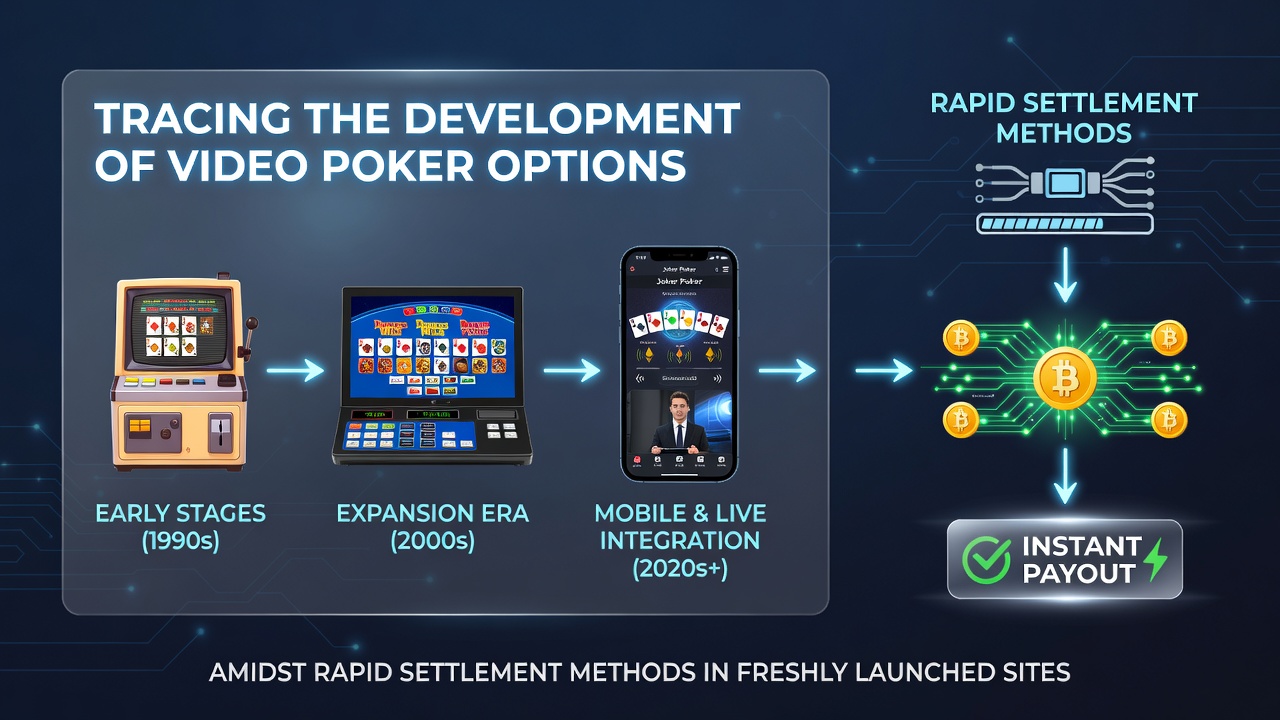
Video poker emerged in the mid-1970s as a combination of traditional poker rules and electronic slot mechanics, and operators began installing the first machines in Nevada casinos around 1979. Manufacturers such as International Game Technology refined the format through the 1980s, adding draw poker variants that allowed players to hold and replace cards on digital screens. Data from the Nevada Gaming Control Board shows that video poker machines accounted for more than 60 percent of slot floor revenue in many Las Vegas properties by the early 1990s, establishing a steady demand that later transferred to digital environments.
Shift Toward Online Formats and Settlement Speed
Online casinos started offering video poker in the late 1990s, yet settlement times often stretched across several banking days because of reliance on wire transfers and mailed checks. Freshly launched sites in the 2010s adopted e-wallet integrations and prepaid card systems that reduced processing intervals to under 24 hours, and newer platforms launched after 2020 introduced instant bank transfers through open banking protocols. Observers note that these changes aligned with broader regulatory updates in multiple jurisdictions, where licensing bodies required operators to demonstrate reliable payout mechanisms before granting operational approval.
Research from the American Gaming Association indicates that video poker remains among the most popular table-game hybrids in regulated markets, with participation rates holding steady even as new settlement options expanded. Sites entering the market in 2024 and 2025 frequently bundle video poker libraries with same-day withdrawal features, creating packages that appeal to players who value both game selection and liquidity. Figures released by the New Jersey Division of Gaming Enforcement reveal that video poker contributed approximately 8 percent of total online gaming revenue in that state during the first half of 2025, a share maintained alongside faster settlement tools.
Technical Evolution of Game Options
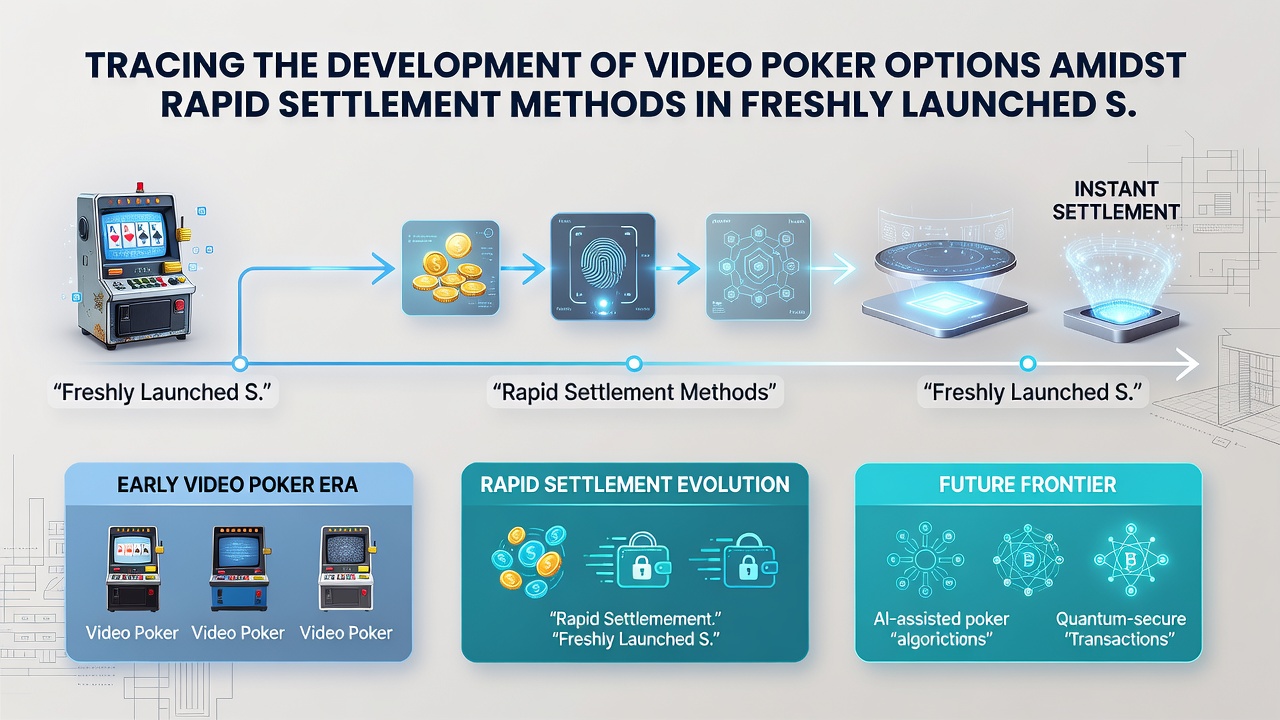
Developers expanded video poker beyond basic Jacks or Better and Deuces Wild variants by introducing multi-hand formats and progressive jackpots that link across multiple sites. These additions required backend systems capable of handling simultaneous draws and real-time accounting, and the same infrastructure now supports rapid settlement by updating player balances immediately after each round. Freshly launched platforms often integrate these games with application programming interfaces that connect directly to payment processors, eliminating manual verification steps that once delayed transfers.
By August 2026, several operators plan to roll out additional titles that incorporate skill-based bonus rounds while maintaining compliance with random-number-generator standards set by independent testing laboratories. Those laboratories, including Gaming Laboratories International, continue to certify both game outcomes and payout speed under unified audit frameworks. This dual certification process has become standard in new market entries across North America and parts of Europe, where regulators require documented evidence that settlement systems function without interruption.
Regulatory and Market Influences on New Platforms
Licensing authorities in Ontario and Michigan have incorporated settlement-time benchmarks into their compliance checklists, requiring operators to process verified withdrawals within specified windows. Data compiled by the Canadian Gaming Association shows that platforms meeting these benchmarks experience higher player retention metrics compared with earlier generations of sites that relied on slower methods. Freshly launched operators therefore prioritize partnerships with financial technology firms that provide real-time verification, allowing video poker sessions to conclude with immediate balance updates and transfer confirmations.
Market reports from iGaming Ontario further illustrate that video poker traffic peaks during evening hours when instant settlement options are most visible in promotional materials. Operators respond by highlighting these features in onboarding sequences, and the practice has carried over to sites preparing for August 2026 launches in additional U.S. states. Industry analysts track these patterns through anonymized transaction data, confirming that the combination of established game mechanics and accelerated fund movement supports consistent engagement levels.
Conclusion
The progression from standalone video poker machines to integrated online offerings reflects ongoing adaptation to both player preferences and regulatory expectations around settlement efficiency. New sites continue to refine these elements by embedding certified game libraries within payment frameworks that prioritize speed and transparency. Documentation from multiple oversight bodies confirms that such developments maintain measurable standards while expanding access across emerging markets.