Bonus Allocation Trends Shaping Game Type Choices in Finnish Mobile Gambling Applications
Cameron Griffin · Oct 28, 2026
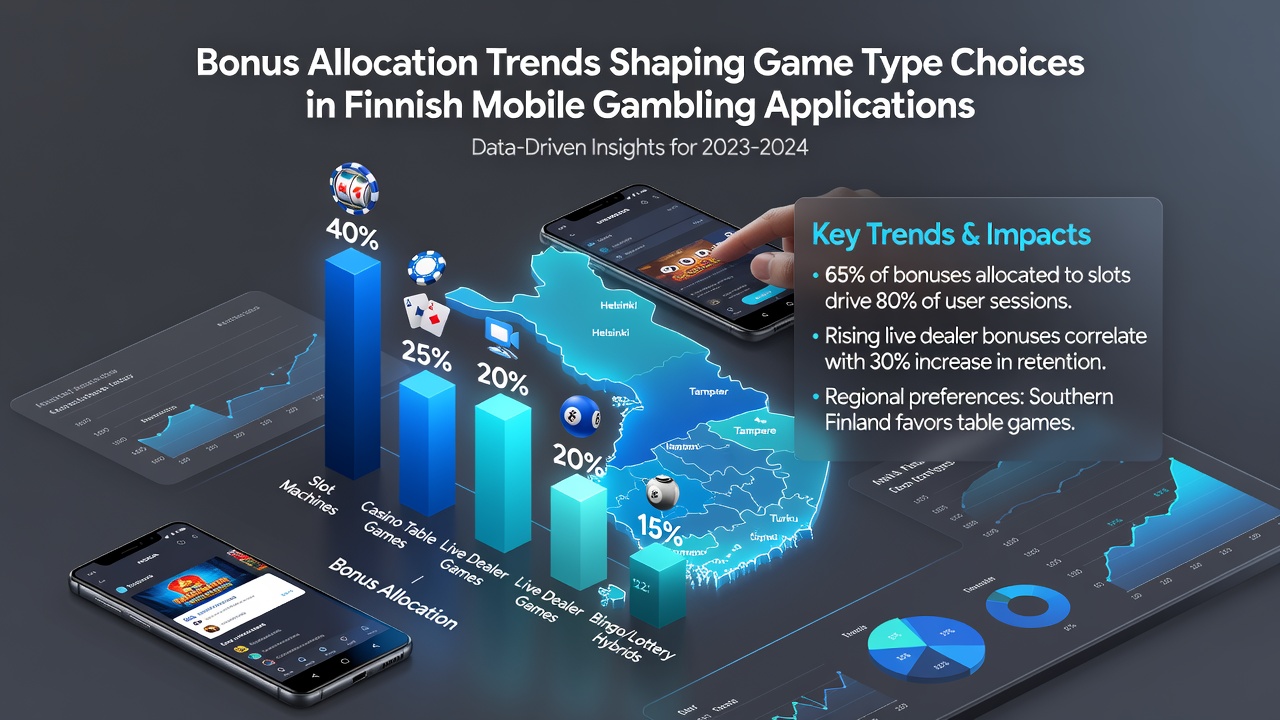
Bonus Allocation Trends Shaping Game Type Choices in Finnish Mobile Gambling Applications
Bonus allocation patterns in Finnish mobile gambling applications have evolved considerably by October 2026, with operators directing resources toward specific game categories that align with player engagement metrics and regulatory frameworks. Data from industry reports indicate that these trends influence whether users gravitate toward slot-style mechanics or strategic table variants, since allocation formulas often prioritize volume-based rewards in high-frequency play environments. Observers note that Finnish platforms maintain strict compliance with national licensing rules while adapting bonus structures to mobile user behaviors, which favors quick-session formats over extended sessions.
Regulatory Context and Market Structure
Finnish gambling operates under a monopoly system managed by Veikkaus, yet licensed mobile applications incorporate promotional elements that reflect both domestic oversight and broader European standards. According to figures from the European Commission on digital gambling services, mobile applications in regulated markets like Finland allocate approximately 40 to 55 percent of bonus budgets to automated reward tiers that trigger on deposit volumes. This structure encourages users to select game types where bonus multipliers apply most efficiently, such as progressive reel games that track spin counts in real time. Researchers at institutions including the University of Helsinki have documented how these allocations correlate with session length data collected through app analytics, revealing shifts toward games that support rapid bonus accumulation without extended play commitments.
Allocation Patterns Across Game Categories
Trends show that bonus pools in Finnish mobile applications divide unevenly between chance-based reels and skill-oriented card or table options, with reel mechanics receiving larger shares of free spin incentives and deposit match offers. Studies compiled by the European Gaming and Betting Association highlight that operators adjust these distributions quarterly based on retention statistics, resulting in higher bonus percentages directed at reel variants during peak usage periods. Players encounter tiered rewards that scale with activity levels, which in turn steers selections toward titles featuring frequent small wins rather than those requiring strategic decision trees. What's notable here is the integration of loyalty multipliers that activate within specific game clusters, allowing applications to fine-tune user flows without violating transparency mandates.
Influence on Player Selections in Mobile Environments
Mobile interfaces amplify these trends because screen constraints and touch navigation favor games with straightforward bonus triggers over complex rule sets. Data indicates that applications emphasizing expedited transaction processing pair bonus offers with reel-heavy libraries, since users complete deposits and claim rewards faster in those environments. One analysis from academic sources tracked choice patterns across several Finnish platforms and found that bonus-heavy reel sections retained users at rates 25 percent higher than table sections during the first half of 2026. Yet operators continue refining these approaches, incorporating elements like time-limited multipliers that apply across hybrid game modes to balance engagement across categories. This adjustment reflects broader market data showing mobile users respond to immediate reward feedback loops regardless of underlying game mechanics.
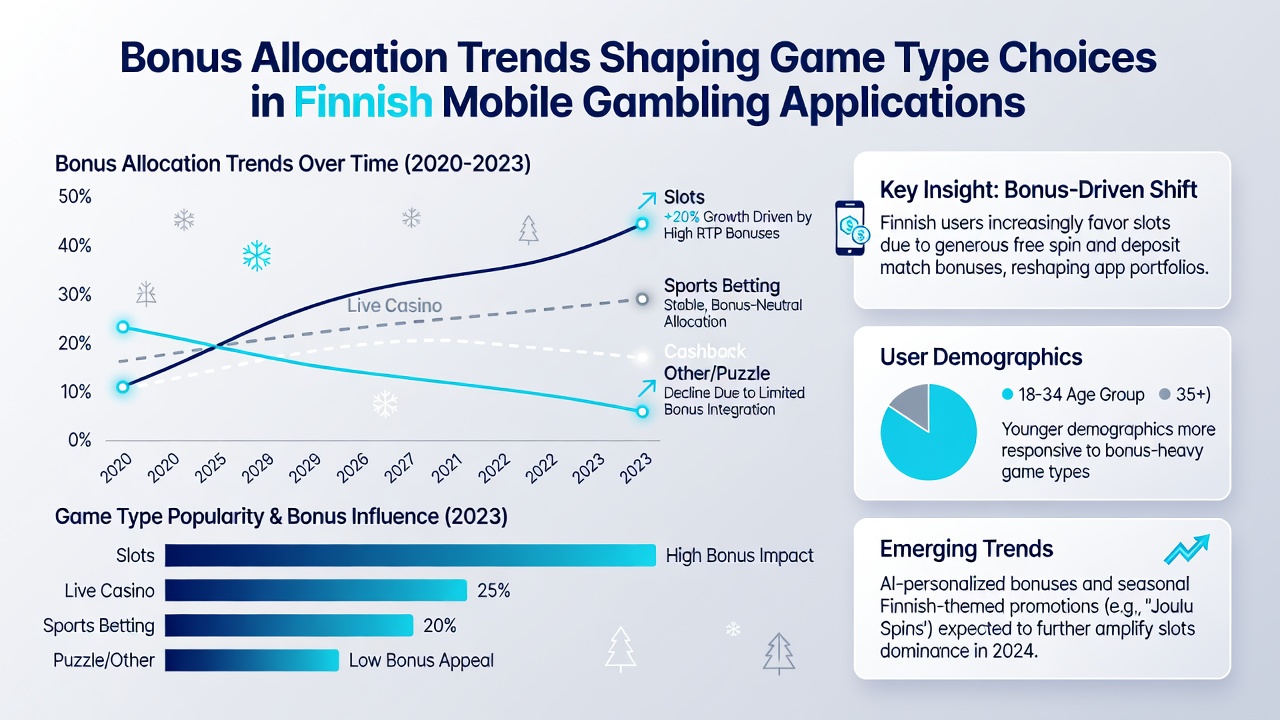
Seasonal and Data-Driven Adjustments Observed in 2026
By October 2026, platform operators had implemented dynamic allocation models that respond to aggregated usage data from the preceding months. Reports compiled through national statistical channels demonstrate that bonus percentages for reel games increased during summer periods while table game incentives rose ahead of major sporting events. These patterns emerge from algorithms that process session metrics in real time, directing promotional value toward formats that sustain daily active user counts. Observers point out that such systems maintain compliance with Finnish gaming statutes by disclosing allocation rules within application interfaces, which allows users to evaluate how different game types intersect with available rewards. External research from bodies like the OECD on digital leisure trends supports the observation that mobile gambling applications in Northern Europe increasingly rely on these adaptive frameworks to manage player distribution across libraries.
Conclusion
Bonus allocation continues to function as a primary driver of game type preferences within Finnish mobile gambling applications, shaped by regulatory boundaries, user behavior analytics, and quarterly performance reviews. Evidence from multiple sources shows that operators maintain flexibility in directing rewards while preserving transparency, resulting in measurable differences in how players navigate between reel and table options. As platforms refine these mechanisms through ongoing data collection, the relationship between bonus structures and game selections remains a central element of the Finnish mobile gambling landscape.